SWS Journal
Where to Spend & Where to Save in a Beautiful Home
A considered home isn't about spending more. It's about knowing where it matters.
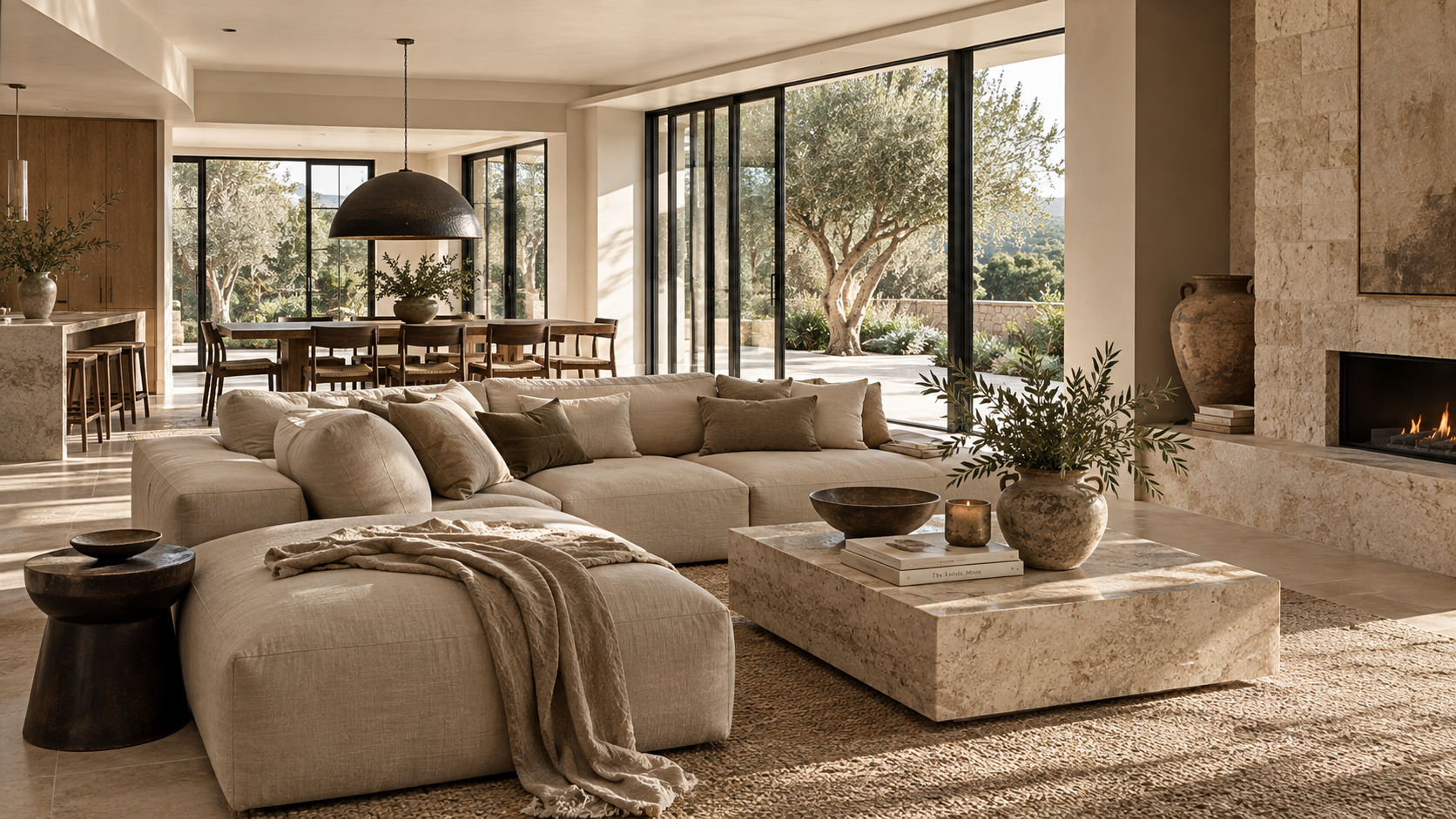
There’s a misconception that creating a beautiful home means buying the best version of everything.
It doesn’t.
The spaces that feel most considered usually have a hierarchy. There are pieces that earn their investment, quieter choices that simply need to do their job well, and things that probably didn’t need to be bought at all.
Knowing the difference can change both how a room looks and how much it costs to get there.
Here’s where we’d save, where we’d spend, and what we’d skip.
SPENDThe sofa you actually live on
A sofa has more jobs than almost anything else in a living room. It needs to anchor the space, establish its proportions and still be somewhere you genuinely want to sit at the end of the day.
This is one place where spending more can make sense — but price alone isn't the measure.
Look at the frame, fabric composition, cushion construction and dimensions before the label. Natural or high-performance fabrics tend to age better, while deeper seats and generous proportions can give a room that relaxed, substantial feeling often seen in high-end interiors.
SAVEDining chairs
Dining chairs are an easy place to overspend.
Unless the chair itself is intended to be the hero of the room, silhouette and proportion generally matter more than provenance.
A simple timber or steel-framed chair with a good line can sit comfortably alongside a much more expensive dining table. Repetition also works in your favour: six well-chosen $300 chairs can create just as much visual impact as six at three times the price.
Where we wouldn't compromise is comfort. A beautiful chair nobody wants to sit in isn't a particularly clever purchase.
SPENDLighting — but spend on the right things
Lighting has an outsized influence on how a room feels.
The mistake isn't necessarily buying inexpensive lighting. It's buying lighting that's too small, too cold or positioned as an afterthought.
A generously scaled pendant over a dining table can do more for a room than several decorative purchases combined. The same applies to wall lights and lamps: warm, layered light gives materials depth and makes a space feel finished.
That doesn't mean every fitting needs to be expensive.
SAVEDecorative objects
This is where restraint pays off.
A shelf filled with small expensive objects can feel far less resolved than one oversized vessel, a stack of books and something collected over time.
When it comes to decorative pieces, scale, texture and placement often matter more than price. Vintage stores, markets and inexpensive retailers can sit comfortably alongside investment furniture when the pieces are chosen deliberately.
It's also an area where we'd rather wait than buy something simply because a corner looks empty.
SPENDNatural materials where you'll notice them
Stone, timber and metal are some of the materials that give a home depth, but using the most expensive version everywhere isn't necessary.
Instead, concentrate them.
A beautiful slab of stone on an island, solid timber where your hands actually touch it or aged metal on a feature fitting can carry much more visual weight than spreading the budget evenly across a room.
And when the real material isn't practical, we'd rather choose an honest alternative than something trying too hard to imitate it.
DON'T SKIPStorage
Storage isn't the glamorous part of designing a home, which is exactly why it's often considered too late.
But a beautiful room only works when everyday life has somewhere to go.
Closed cabinetry, deep drawers, baskets with lids, built-in benches and furniture that quietly hides what you don't want to see can make a bigger difference to a room than another decorative purchase.
Good storage shouldn't necessarily announce itself. Often, the best version disappears into the room.
SAVETrends
Trends are useful for identifying what you're drawn to. They're less useful as a shopping list.
If something very specific is having a moment — a particular finish, shape or colour — we'd be cautious about making it the most expensive piece in the room.
Instead, bring trends in through things that can evolve: cushions, smaller lighting, objects, occasional furniture or paint.
Spend more on the pieces you'd still choose if nobody was posting them.
The principle behind it all
A beautiful home doesn't need to prove how much was spent on it.
Some things deserve investment because they're used every day, difficult to replace or fundamental to the room. Others simply need the right proportion, material or placement. And some things are better left out entirely.
That's the thinking behind Save / Spend / Skip.
Not the cheapest option. Not automatically the most expensive.
Just a more considered one.
More from the Journal
SWS Journal/Living Rooms, Bedrooms
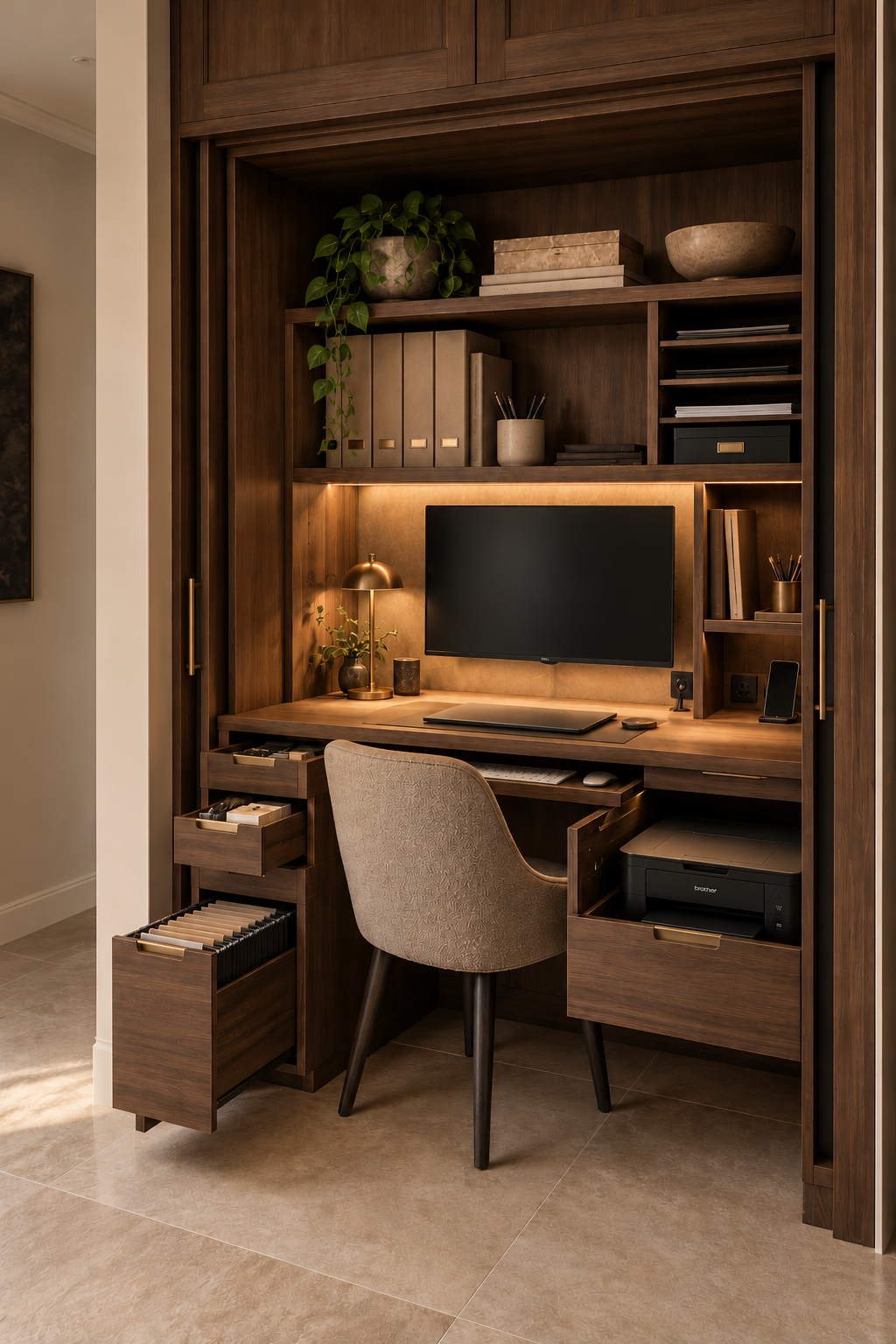
How to Create a Hidden Home Office with Built-In Storage
A full workstation that closes behind cabinet doors. Here's how the design works, what to measure, and where the money actually matters.
Save / Spend / Skip/Dining
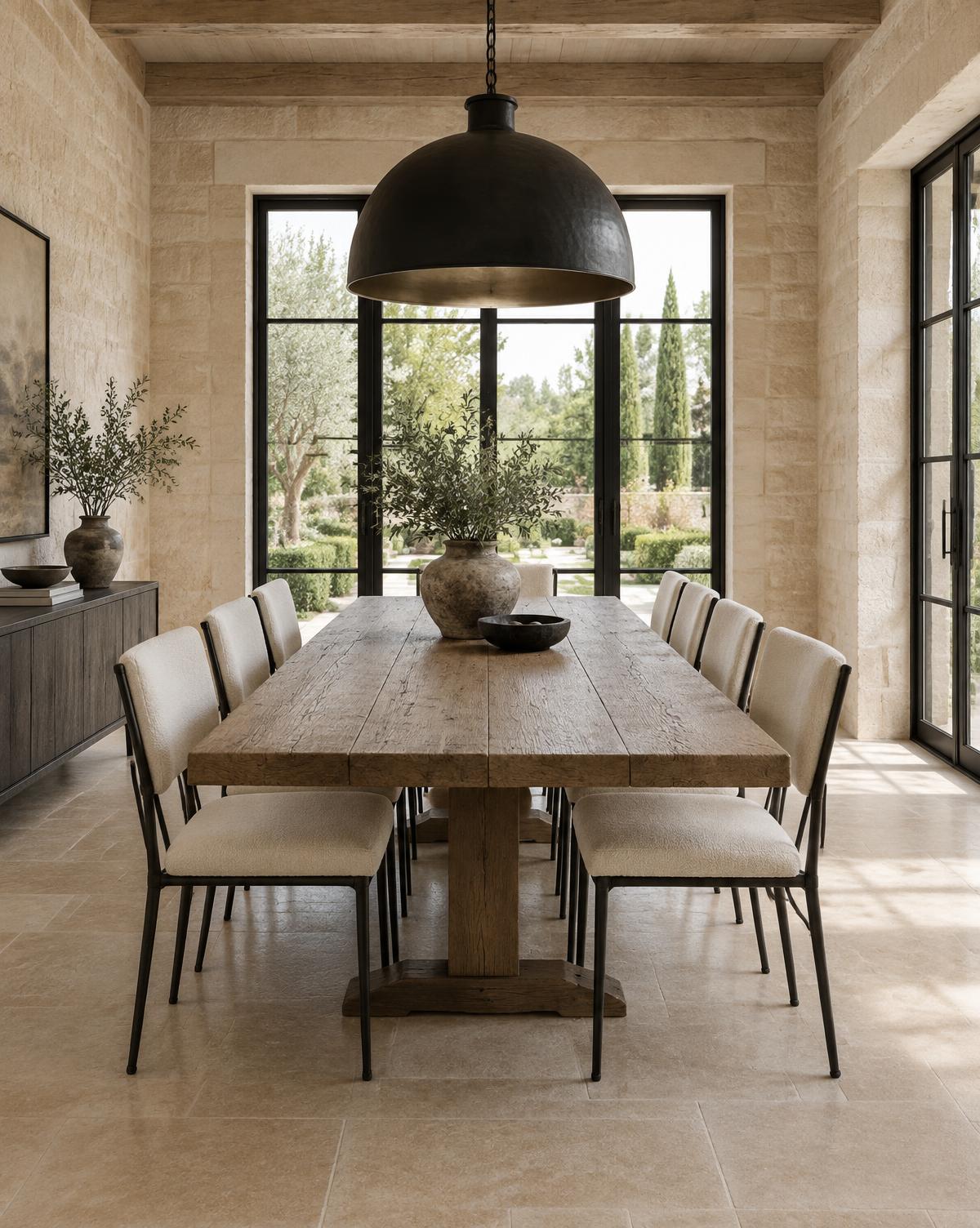
The dining chairs that deliver the look without the designer price.
Black steel frame, upholstered seat, clean line. You don't need the original to get the room.
4 min read
SWS Journal/Living Rooms, Entryways
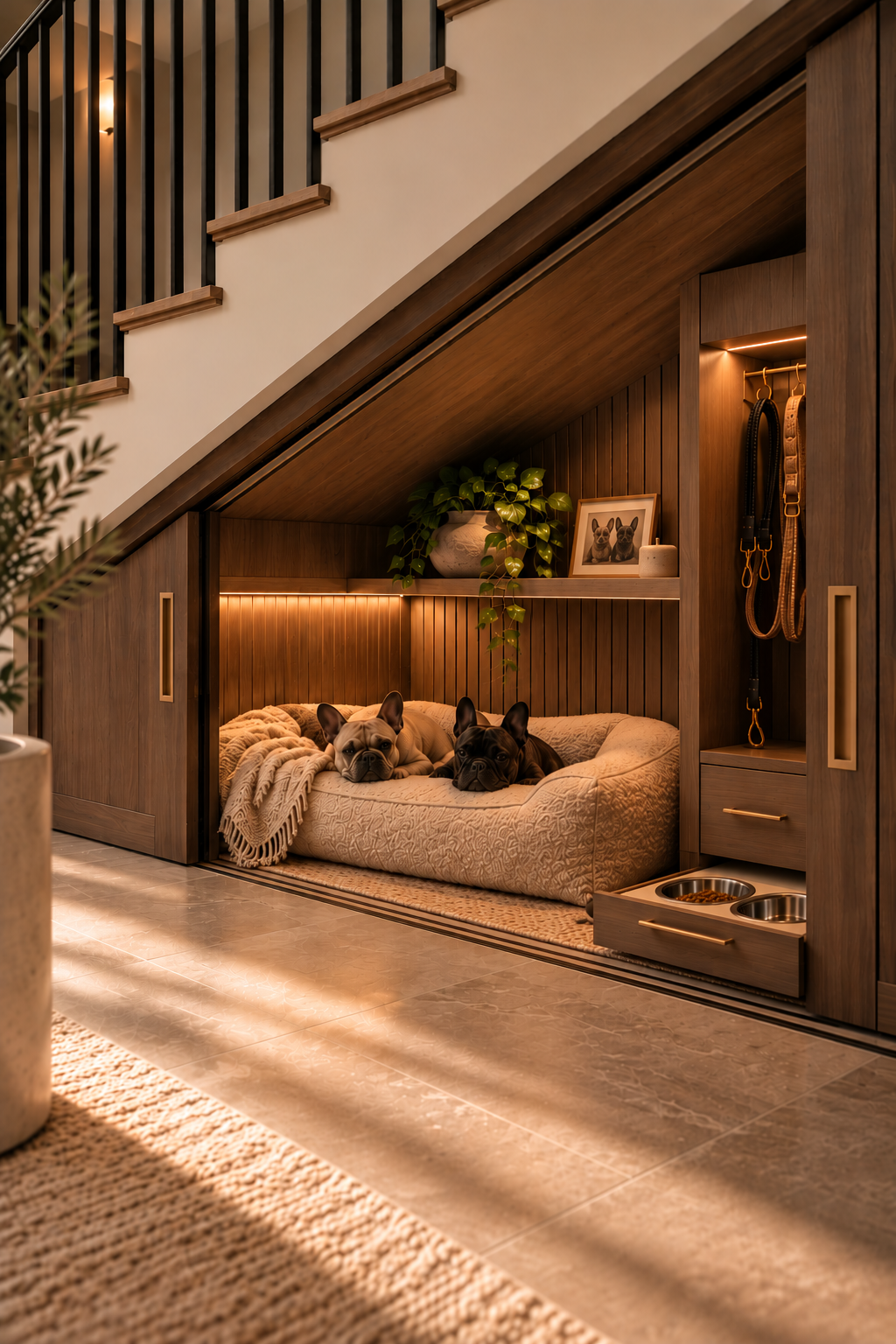
The Hidden Dog Nook: Beautiful Under-Stair Storage Ideas for Dog Lovers
Margaret and Barbara like to be close. Their beds take up room we need in the lounge. An under-stair nook is a way to keep them nearby, with somewhere for their things to go.
Space Well Spent is an independent interiors journal about where money matters in a home — and where it doesn't.