SWS Journal
How to Create a Hidden Home Office with Built-In Storage
A full workstation that closes behind cabinet doors. Here's how the design works, what to measure, and where the money actually matters.
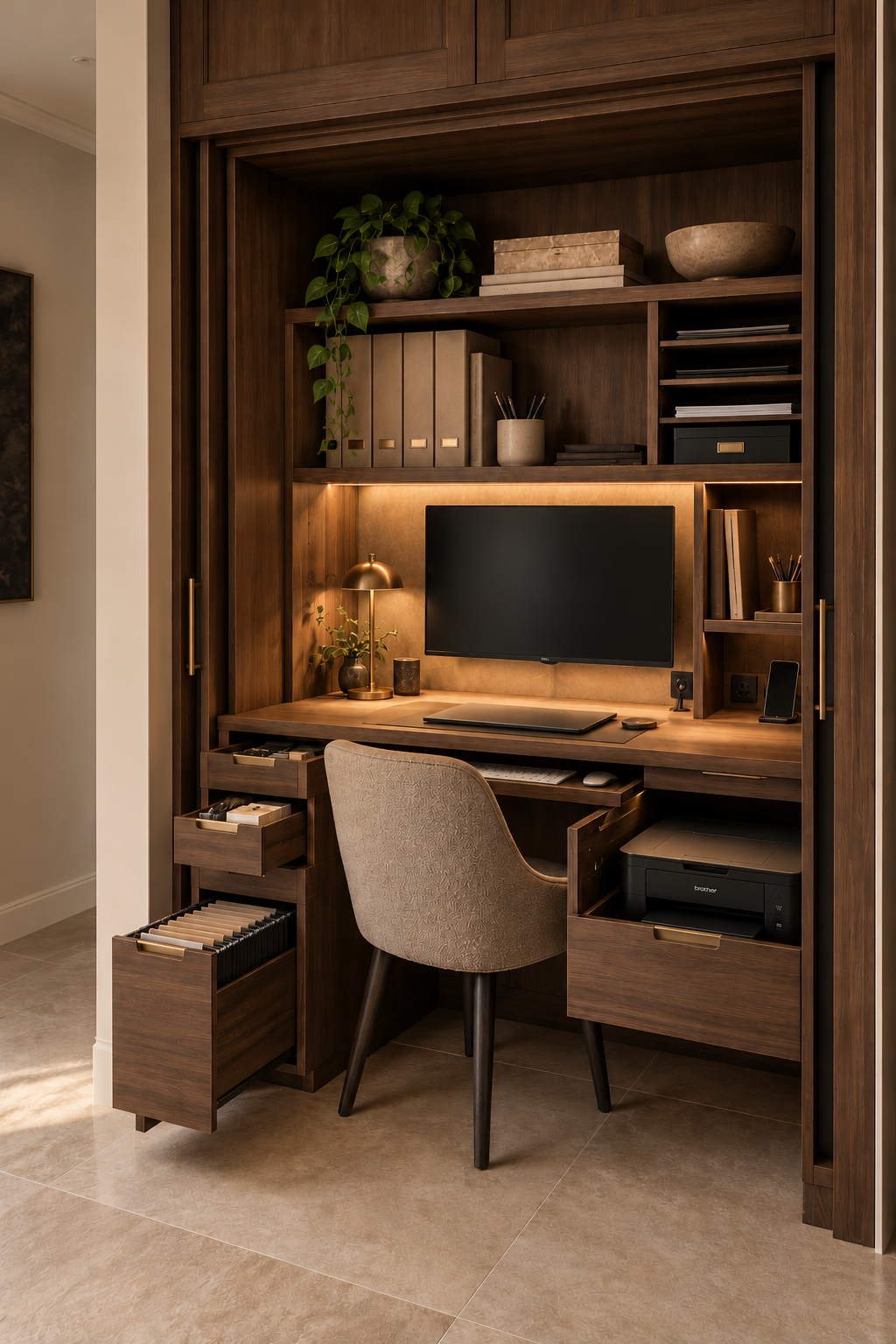
A home office that disappears
The problem with working from home in a smaller house or apartment isn't finding somewhere to sit with a laptop. It's that the office never leaves. The monitor, the papers, the charger cables — they colonise the dining table or the corner of the living room, and the room stops feeling like a home long after the workday ends.
A hidden home office solves that properly. Rather than a desk that tries to look tidy, it's a complete workstation built into cabinetry, with doors that close over the whole thing. At nine it's an office. At six it's a beautiful wall of joinery.
The design pictured here is a good example of how far the idea can go: walnut cabinetry with pocket doors, a proper desk surface, a pull-out printer drawer, filing and stationery drawers, adjustable shelving and warm integrated lighting. It reads as furniture first, office second. Below, we break down how to plan one for your own space — what to measure, what to spend on, and where you can save.
1. Choose the right location
The best spot for a concealed office is usually an alcove, an unused section of living room wall, or a recess that already exists in the floorplan. Building into a recess means the cabinetry doesn't project into the room, and the doors can close flush with the surrounding wall.
Before anything is designed, measure honestly. A comfortable hidden office wants around 1400–1800mm of width and 600mm of depth, but it can work at a minimum of about 1000mm wide and 500mm deep if you choose a compact chair and a single screen. Depth is the dimension people underestimate: the desk surface, the monitor, and the space to push a keyboard back all come out of it.
Then check the practicalities. Natural light from the side is ideal — directly behind the screen causes glare, directly behind you creates silhouette lighting on video calls. You'll need at least two power points inside the cabinet (four is better), and they're far cheaper to add before the joinery goes in. Allow ventilation for a printer or desktop computer, and make sure there's at least 900mm of clear floor in front of the cabinet so the chair can roll back and the doors can open without hitting furniture or a walkway.
2. Design cabinetry that conceals the workspace
The doors are what make this a hidden office rather than a desk in a cupboard — and the mechanism matters more than the material. Conventional hinged doors swing out into the room and stand open while you work, which is exactly what you're trying to avoid in a multipurpose space.
Pocket doors, like the ones pictured, slide open and then retract into the cabinet sides, disappearing completely while the office is in use. They need a pocket of roughly 50–80mm on each side of the opening, so they cost you a little internal width, but the payoff is a workstation you can sit at without a door in your shoulder. Bifold and sliding doors are the fallback where depth is tight.
Custom joinery is worthwhile when the alcove is an awkward size, when you want the cabinet to match existing furniture, or when the office needs to disappear into a formal room. If the space is a standard width, a modular or flat-pack carcass with made-to-measure doors can halve the cost — spend the difference on the door hardware and drawer runners, which are the parts you touch every day.
3. Make storage work harder
Look at how the pictured office uses its volume. Nothing is stored vaguely. The printer sits on a pull-out drawer at hip height, so paper can be loaded and jams cleared without lifting the machine. Filing lives in a deep drawer directly beside the chair. Shallow drawers take stationery — shallow, because small items get lost in deep ones. Above the desk, adjustable shelves carry vertical document files, and the least-used equipment sits highest and furthest back.
The principle is simple: the things you touch daily sit between knee and shoulder height, within arm's reach of the chair. Everything else moves up, down or back. A hidden office has less storage than a spare-room study, so the storage has to be more deliberate.
A few practical notes. Pull-out printer shelves need full-extension runners rated well above the printer's weight — a small laser printer is 8–12kg, and you'll lean on the shelf while clearing a paper path. Leave 100mm of clearance above the printer for ventilation and lid swing, and a cable gap at the back of every shelf that carries equipment. Drawer fronts should be sized to what goes inside: 80–100mm for stationery, 150mm for paper and notebooks, 300mm or more for suspension files.
The find
SAVE
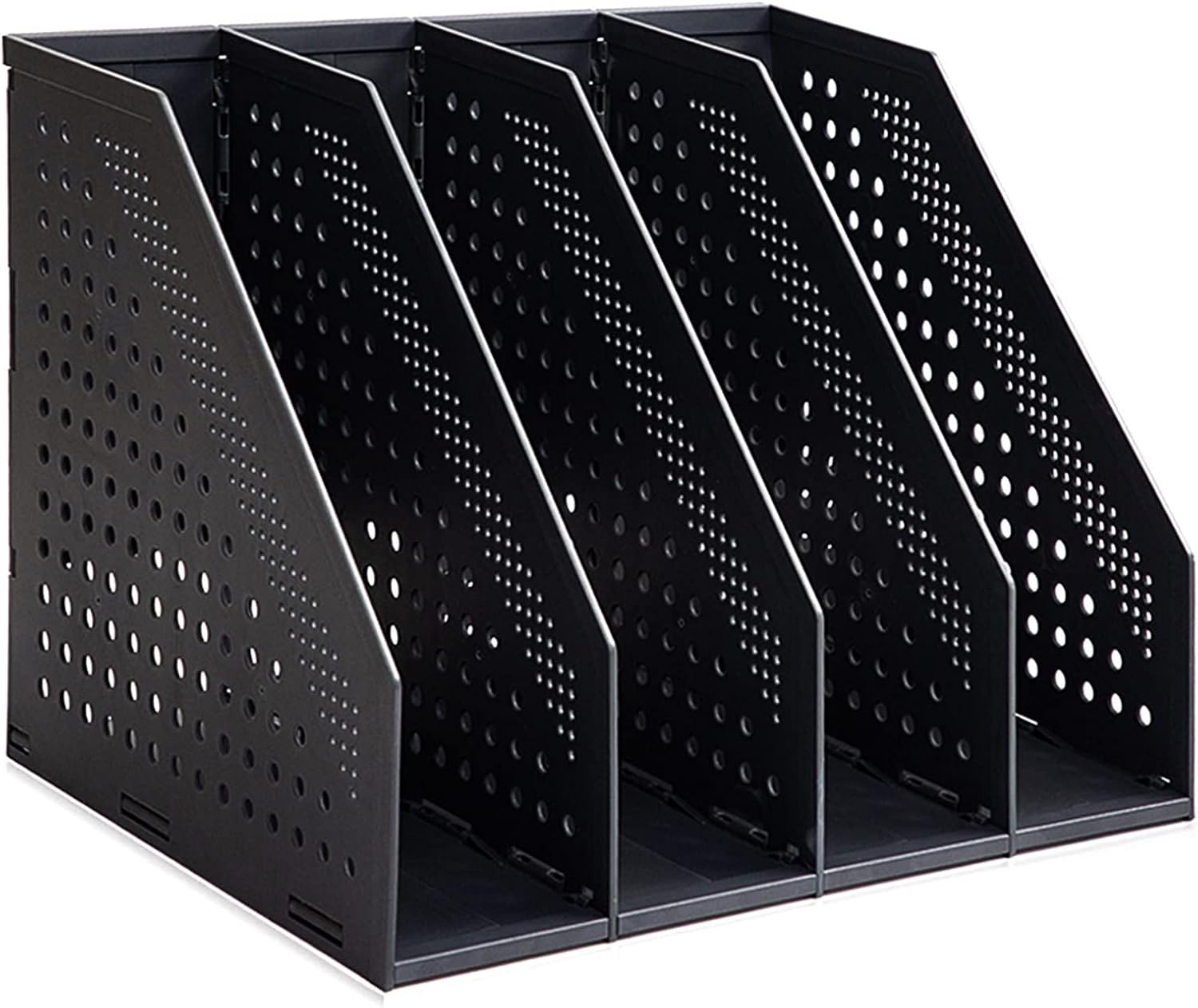
SAYEEC Collapsible File Holder, 4 Compartments, Black
Why it earns its place: An adjustable four-compartment file holder keeps documents upright and separated — collapse unused sections when you need less storage.
from $23.49 · Amazon Australia
View on AmazonPaid link
The find
SAVE
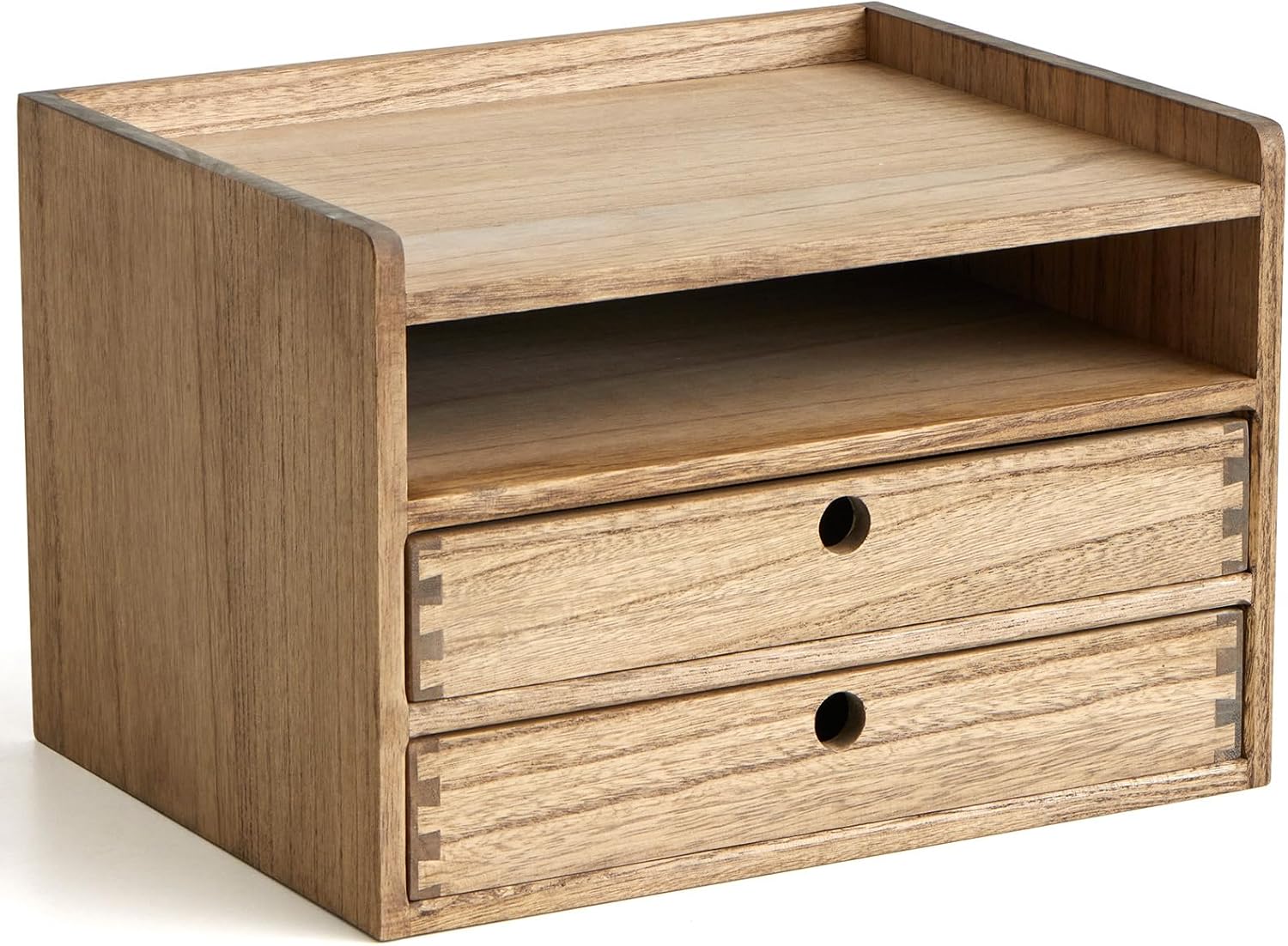
KIRIGEN Wooden Desk Organiser with 2 Drawers, Brown
Why it earns its place: A brown wooden organiser with two drawers to hide small desk essentials and a top tray for the things you reach for daily.
from $69.99 · Amazon Australia
View on AmazonPaid link
4. Create an ergonomic workspace
A concealed office still has to work as an office, and comfort is mostly a matter of a few numbers. Desk height should be 720–750mm for most adults. The top of the screen should sit at or just below eye level, roughly an arm's length away. You need at least 600mm of clear knee depth under the desk, and a chair that can tuck fully inside the cabinet if the doors are to close over it.
It's worth being honest about the limits of the pictured setup. A dining-style chair is fine for an hour or two, but if you're working full days here, a supportive task chair matters more than any other single purchase — choose one low enough to slide under the desk surface. And a laptop used flat on the desk puts the screen well below eye level; a simple riser or an external monitor on an arm fixes that for very little.
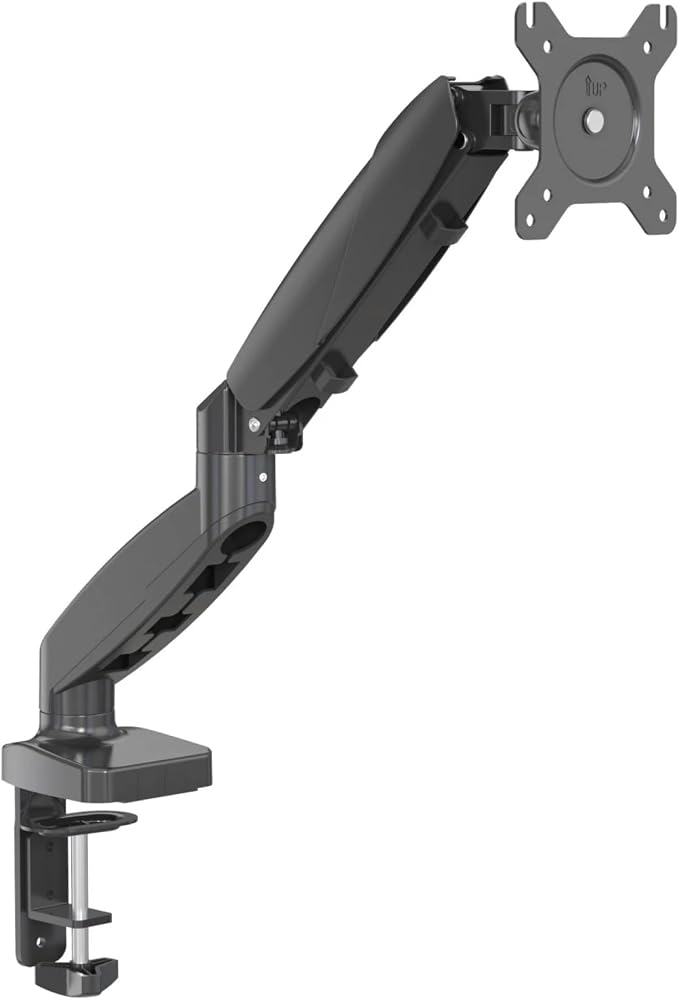
A monitor arm earns its keep twice in a shallow cabinet: it holds the screen at the right height and distance while you work, then pushes it flat against the back panel so the doors close cleanly. A slim keyboard tray or a drawer that doubles as keyboard storage keeps the desk surface clear for paperwork.
The find
SPEND
Gas Spring Single Monitor Arm with Cable Management, Black
Why it earns its place: Frees the desk surface and lets the screen push back flat when the doors close.
from $75.89 · Amazon Australia
View on AmazonPaid link
The find
SAVE
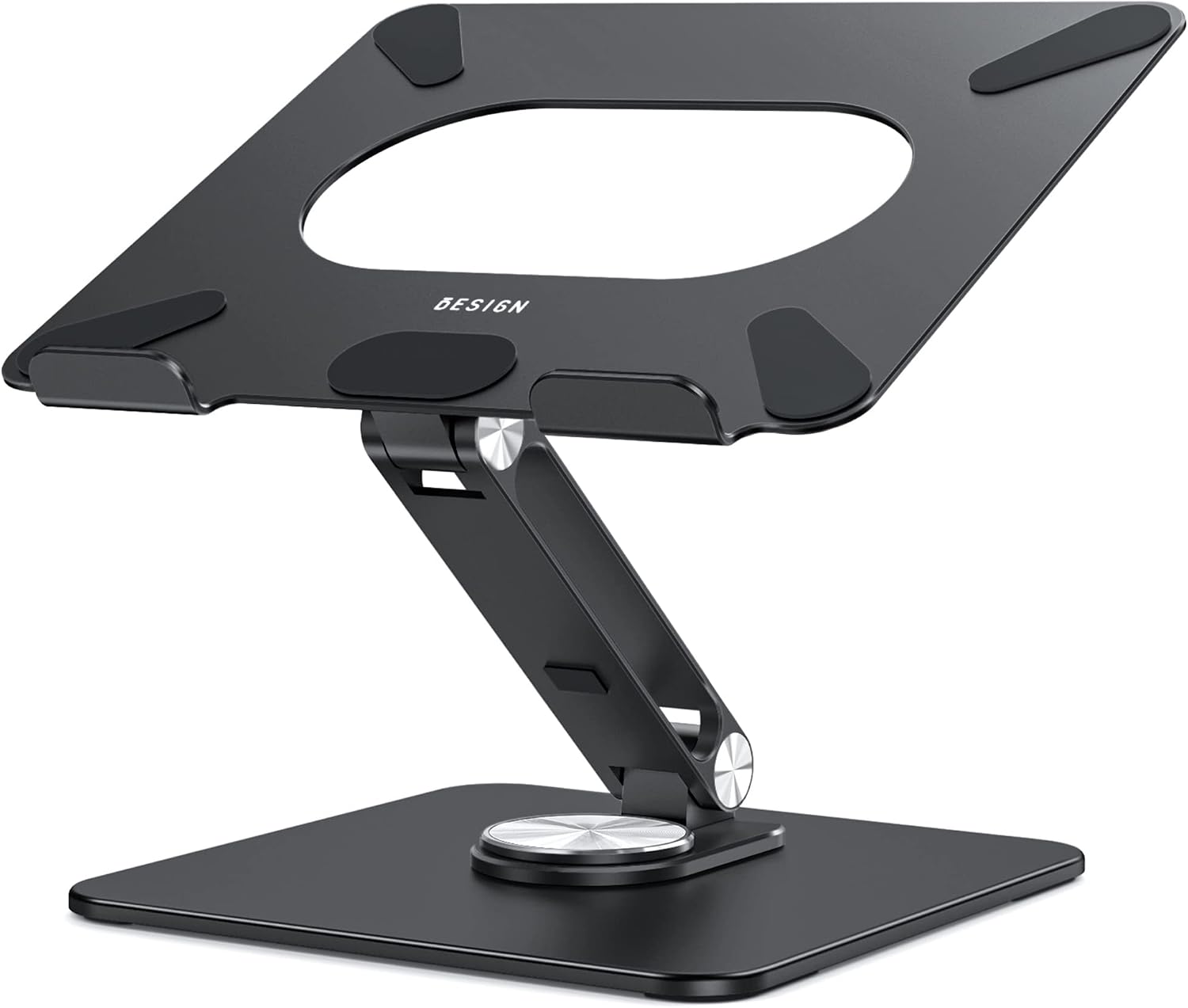
BESIGN LSX7 Adjustable Laptop Stand, Black
Why it earns its place: The BESIGN LSX7 raises the screen towards eye level and rotates to suit your viewing angle. Use a separate keyboard and mouse, and check the lowered stand fits inside the cabinet before closing the doors.
from $39.99 · Amazon Australia
View on AmazonPaid link
5. Conceal technology without sacrificing access
The difference between a hidden office and a hidden tangle of cables is planning. Every device in the cabinet needs power, and most need a data cable, so decide where the power board lives before the joinery is built — not after.
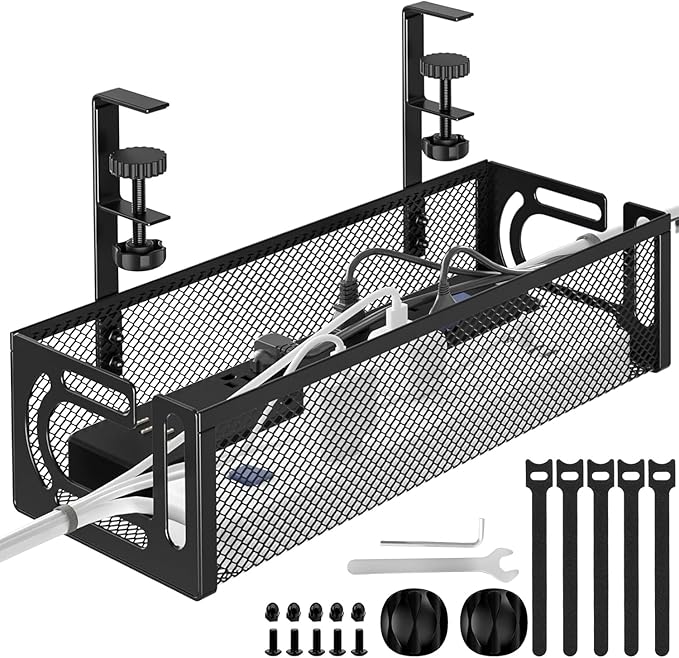
An under-desk cable tray mounted to the underside of the desk surface keeps the power board and excess cable off the floor and out of sight, while staying reachable when something needs resetting. Run cables through grommet holes at the back of each shelf rather than over the edges, and leave a little slack on anything that moves, like a pull-out printer shelf, so the cable travels with it.
A small charging station or wireless charger on a side shelf keeps phones and earbuds off the desk. Position the printer within Wi-Fi range and you can skip a data cable entirely. And a caution worth repeating: anything electrical inside enclosed cabinetry needs airflow, and new power points are a job for a licensed electrician. Hidden should never mean sealed.
The find
SAVE
Under Desk Cable Management Tray, 39cm, No Drill
Why it earns its place: Clamps under the desk without drilling — the power board disappears but stays reachable.
from $28.99 · Amazon Australia
View on AmazonPaid link
6. Choose materials that make it feel like furniture
What makes the pictured office disappear into the room isn't the concealment — it's that the cabinetry is beautiful enough to stand in a living room with the doors open. Walnut-toned timber, warm lighting washing the shelves, brass pulls, and a restrained handful of objects: a plant, a lamp, a bowl. Nothing about it says office.
You don't need solid walnut to get the effect. Timber-look laminate or veneer in a warm mid-brown does most of the visual work at a fraction of the cost, and it's more forgiving of coffee rings. Where the money is better spent is on the things you touch: solid-feeling handles, smooth drawer runners, and lighting with a warm colour temperature — around 2700–3000K — so the cabinet glows rather than glares.
The find
SAVE
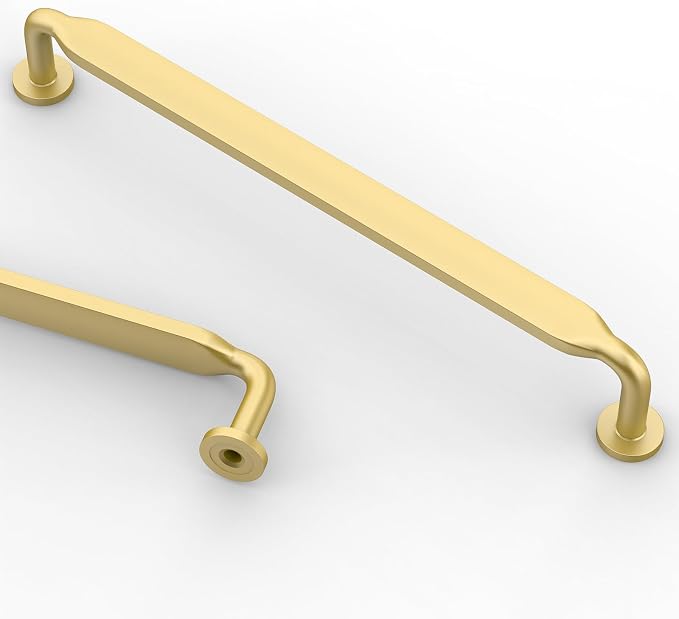
Brushed Gold Cabinet Handles, 160mm, 10 Pack
Why it earns its place: The brass hardware is what makes the cabinetry read as furniture — a ten-pack does the whole wall.
from $29.99 · Amazon Australia
View on AmazonPaid link
The find
FIND
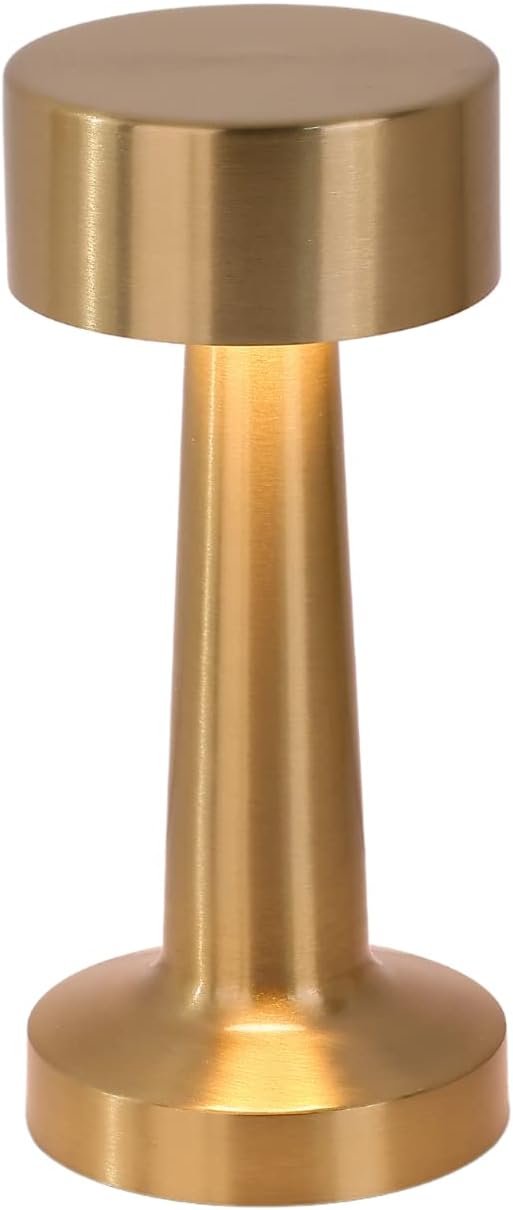
Gold Cordless Rechargeable Table Lamp
Why it earns its place: Cordless, so there's no cable to route — and the warm metallic finish echoes the brass pulls.
from $25.99 · Amazon Australia
View on AmazonPaid link
The find
SAVE
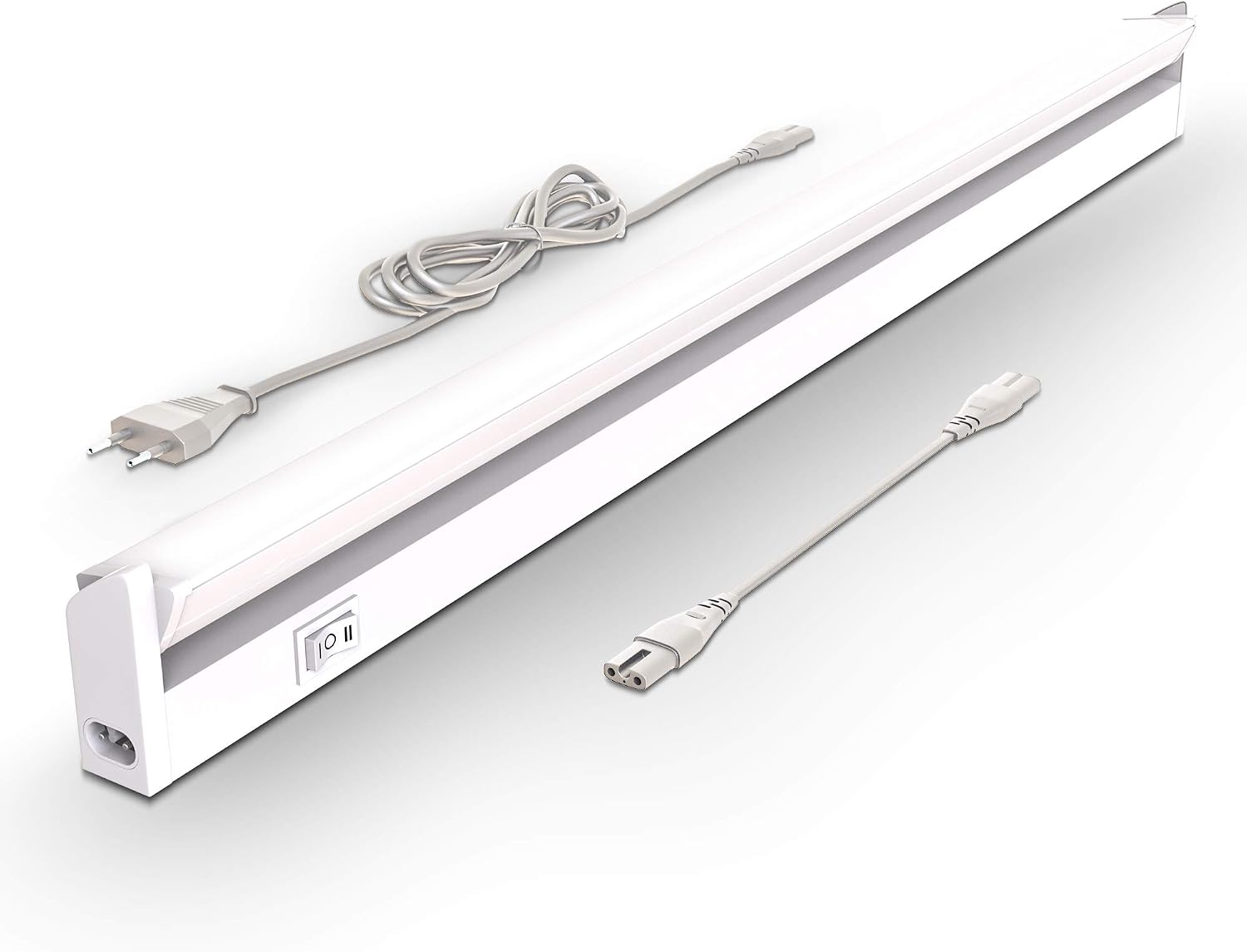
LED Under-Cabinet Light Strip with Switch, Warm to Neutral White
Why it earns its place: A warm-white strip under the shelf lights the work surface, not the ceiling.
from $45.87 · Amazon Australia
View on AmazonPaid link
7. Where to spend and where to save
A hidden office concentrates its budget in a few moving parts. Get those right and the rest can be modest.
Spend on the door mechanism first — pocket or sliding hardware that still glides after five years of daily use. Then drawer runners, particularly anything carrying a printer or files, where full-extension and a generous load rating are non-negotiable. Then the ergonomic essentials: a proper chair, and a monitor arm or riser that puts the screen at the right height. These are the difference between an office you use and one you avoid.
Save on the carcass and internals. A standard flat-pack cabinet with good doors made to fit looks custom once it's installed. Timber-look finishes instead of solid timber. Adjustable file holders and simple desktop organisers instead of bespoke inserts. Decorative accessories can be added slowly — the plant and the bowl can wait; the drawer runners can't.
“Spend on the parts that move and the parts you touch. Save on the parts that sit still.”
Adapt it to your space
Not every home has an alcove waiting to be filled, and not every budget stretches to custom joinery. But the idea scales down gracefully. A single 1000mm-wide cabinet with a drop-down or slide-out desk surface, one shelf of vertical files and a cable tray is still an office that disappears at the end of the day.
Start with the measurements, decide what has to live inside, and let the cabinetry follow. The goal was never a bigger office. It's a home that gets its rooms back.
Shop the function
Shop the Hidden Office Edit
Some links on Space Well Spent may be affiliate links. If you purchase through them, we may earn a commission at no additional cost to you. We only feature products we think are worth the space. As an Amazon Associate we earn from qualifying purchases.
Storage
Under Desk Cable Management Tray, 39cm, No Drill
Why it earns its place: The difference between a concealed office and a concealed mess is where the power board lives. This clamps on without drilling, so the joinery stays untouched.
from $28.99 · Amazon Australia
View on AmazonPaid link
Furniture
Gas Spring Single Monitor Arm with Cable Management, Black
Why it earns its place: Frees the whole desk surface and lets the screen push back flat against the cabinetry at knock-off time — worth the spend in a shallow cabinet where every centimetre of depth counts.
from $75.89 · Amazon Australia
View on AmazonPaid link
Finishing Touches
BESIGN LSX7 Adjustable Laptop Stand, Black
Why it earns its place: Raises the screen towards eye level while leaving room beneath for a keyboard. The rotating base makes it easier to adjust your viewing angle; check its lowered height against the cabinet before closing the doors.
from $39.99 · Amazon Australia
View on AmazonPaid link
Storage
SAYEEC Collapsible File Holder, 4 Compartments, Black
Why it earns its place: Four compartments keep paperwork upright and separated instead of stacked across the desk. Expand it for busy weeks or collapse unused sections when the filing is lighter.
from $23.49 · Amazon Australia
View on AmazonPaid link
Storage
KIRIGEN Wooden Desk Organiser with 2 Drawers, Brown
Why it earns its place: Two drawers conceal the pens, chargers and sticky notes that otherwise migrate across the desk, while the top tray keeps daily essentials within reach. The brown timber finish sits comfortably beside walnut-toned cabinetry.
from $69.99 · Amazon Australia
View on AmazonPaid link
Finishing Touches
Brushed Gold Cabinet Handles, 160mm, 10 Pack
Why it earns its place: The brass pulls are what make the pictured cabinetry read as furniture. A ten-pack does a whole office wall for the price of one designer handle.
from $29.99 · Amazon Australia
View on AmazonPaid link
SWS Find
Gold Cordless Rechargeable Table Lamp
Why it earns its place: Cordless, so there's no cable to route through the joinery — charge it overnight and it sits wherever the task is. The warm metallic finish echoes the brass hardware.
from $25.99 · Amazon Australia
View on AmazonPaid link
Lighting
LED Under-Cabinet Light Strip with Switch, Warm to Neutral White
Why it earns its place: Sized to sit under a shelf and light the work surface rather than the ceiling. Set it to the warm end of its range. Ships from Amazon's international store.
from $45.87 · Amazon Australia
View on AmazonPaid link
More spaces worth saving
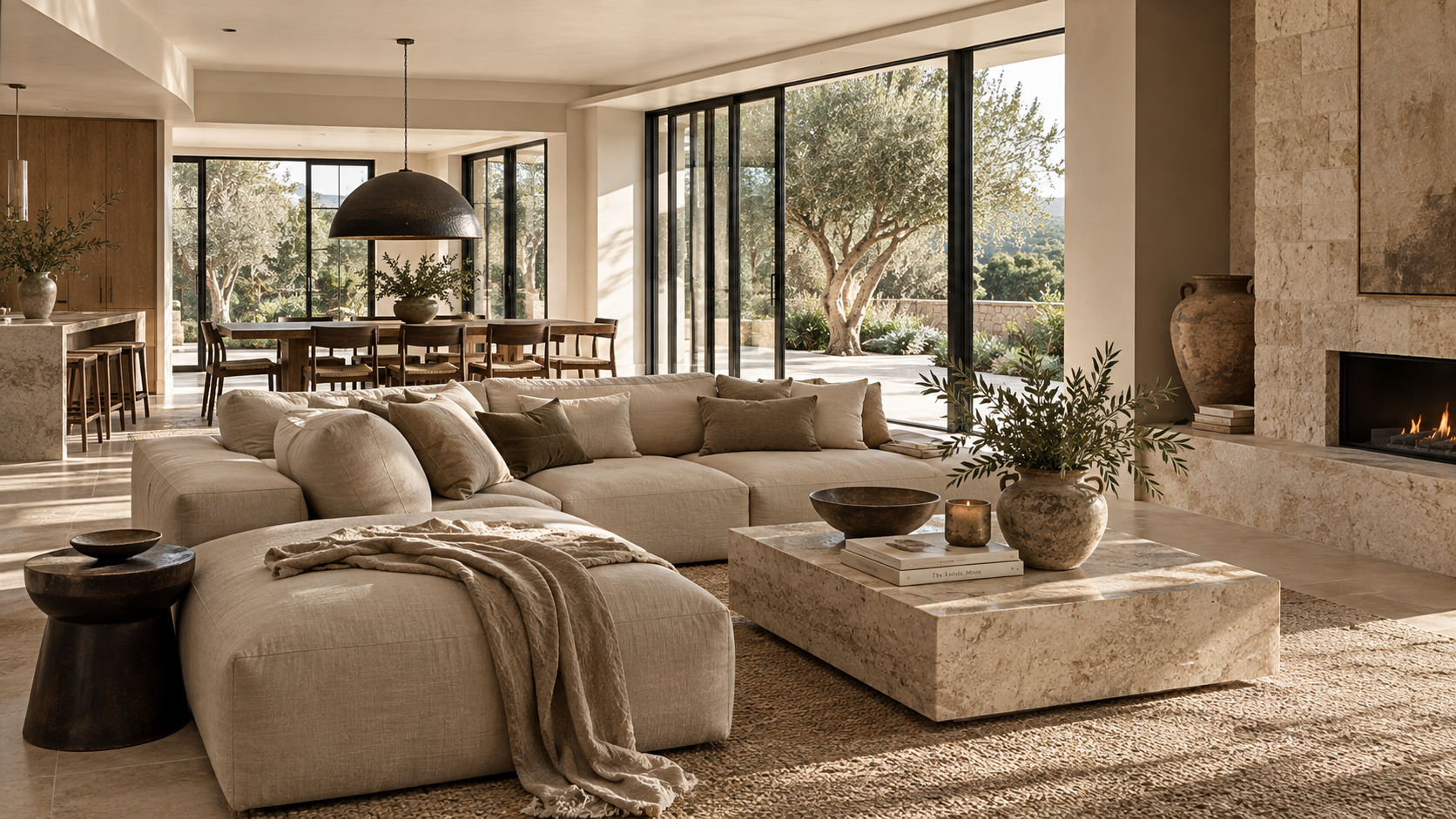
SWS Journal/Living Rooms, Dining, Bedrooms
Where to Spend & Where to Save in a Beautiful Home
A considered home isn't about spending more. It's about knowing where it matters.
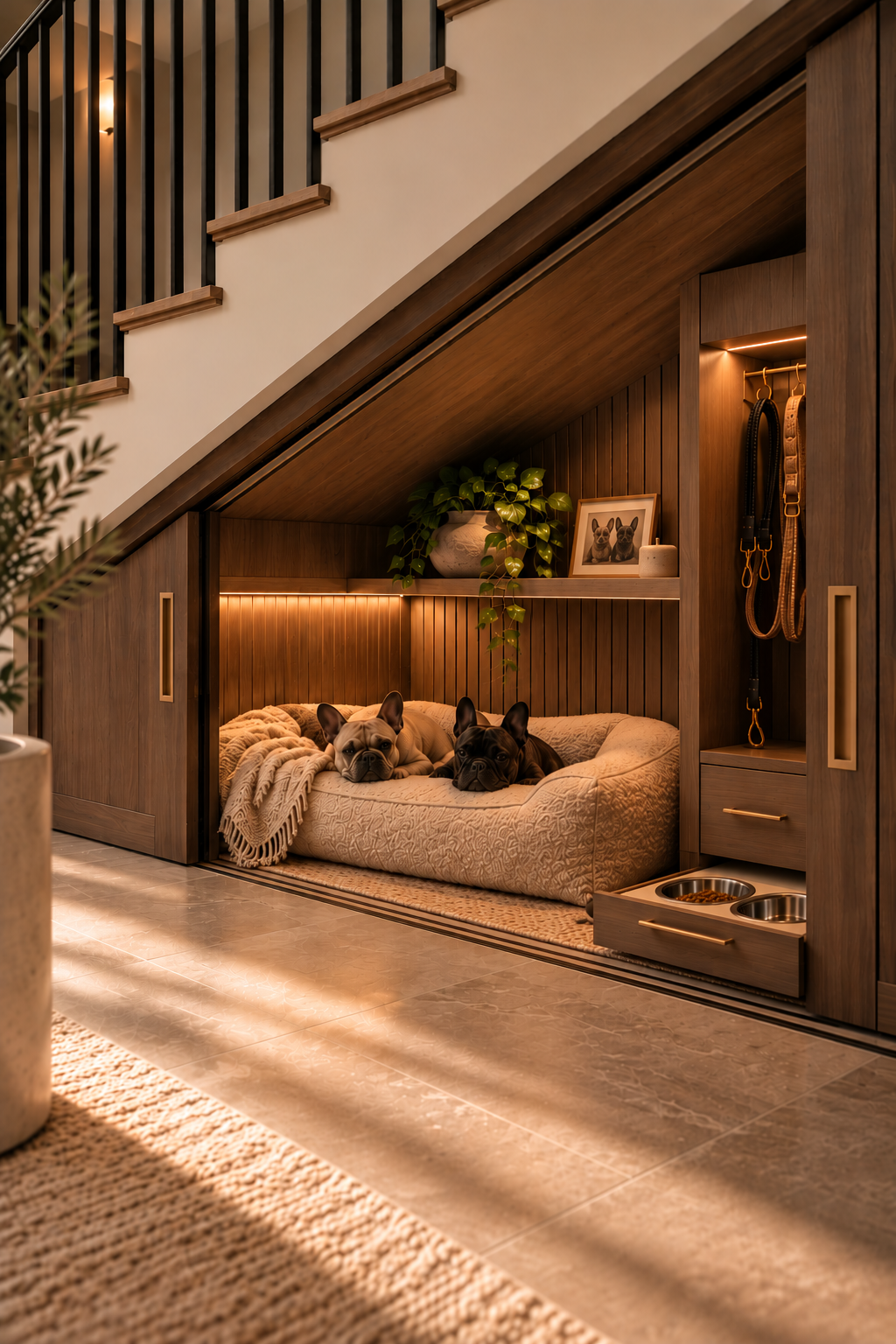
SWS Journal/Living Rooms, Entryways
The Hidden Dog Nook: Beautiful Under-Stair Storage Ideas for Dog Lovers
Margaret and Barbara like to be close. Their beds take up room we need in the lounge. An under-stair nook is a way to keep them nearby, with somewhere for their things to go.
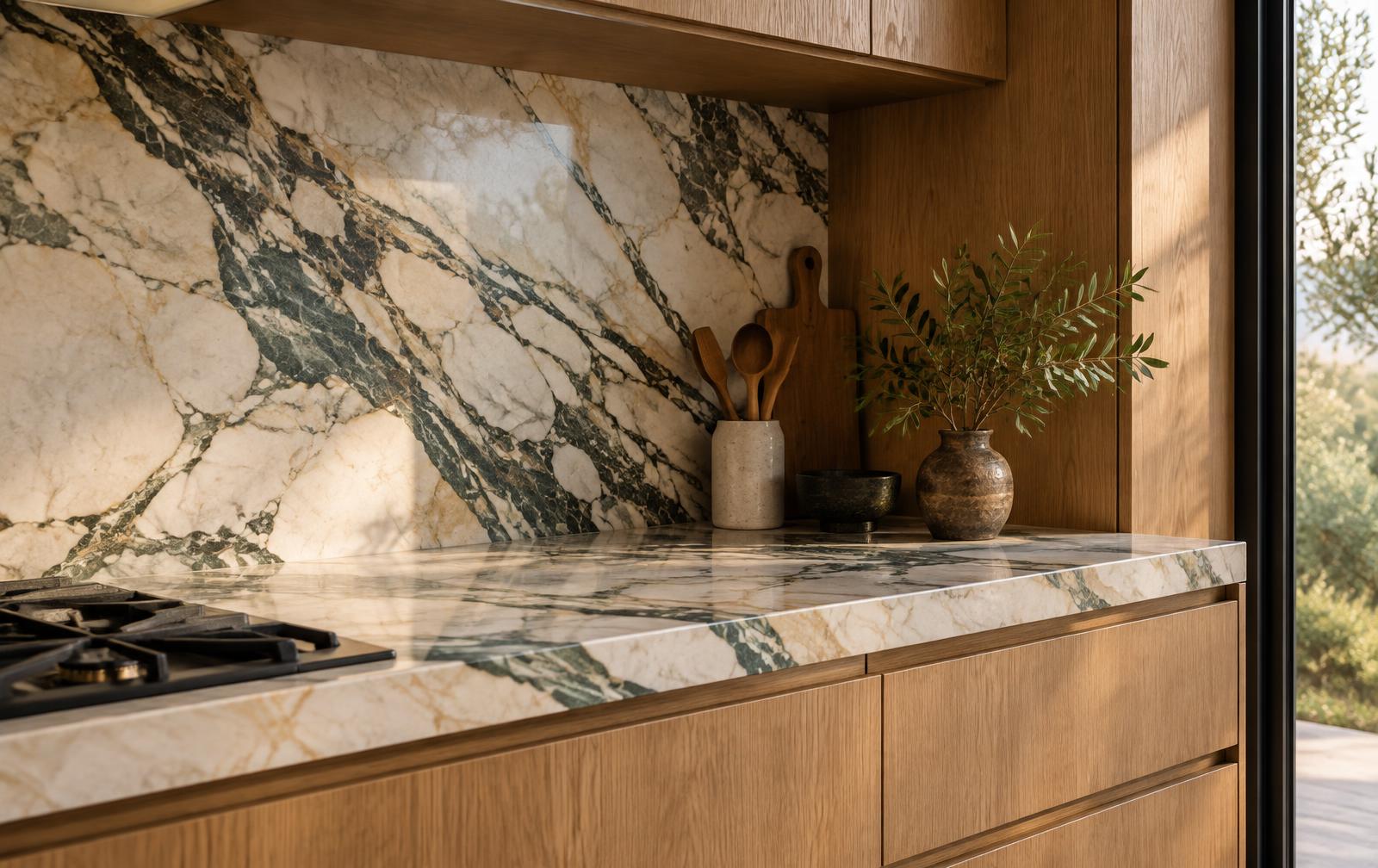
Save / Spend / Skip/Kitchens, Bathrooms, Living Rooms
Natural stone where it actually changes the room.
Not everywhere. In the two or three places your eye lands first.
5 min read
Space Well Spent is an independent interiors journal about where money matters in a home — and where it doesn't.